
Medical Device Cleaning Validation and Cytotoxicity Testing to ISO 10993
Case study
Medical devices undergo cleaning validation as a regulatory requirement to demonstrate that manufacturing residues and contaminants are consistently removed to acceptable levels before patient use. By applying ISO 10993 compliant testing, Lucideon were able to prove that the client’s cleaning process was effective, enabling them to successfully register their product.

The challenge
A client engaged Lucideon to design and perform a cleaning validation to incorporate the most challenging-to-clean features from a range of previously validated devices. This worst-case approach enables manufacturers to demonstrate cleaning effectiveness across multiple product variants without the need to validate each device individually, reducing both validation burden and cost during regulatory submission.
Following cleaning, the client needed to demonstrate that any residual substances, such as detergents or disinfectants, had been removed to levels that were biologically acceptable and would not pose a risk to patients.
The client had previously commissioned cytotoxicity testing at another laboratory, where the device failed cleaning validation due to adverse cytotoxicity results. Lucideon was therefore asked to provide an independent assessment to determine cleaning effectiveness.
What we delivered
Lucideon developed a cleaning validation strategy for the individual components of the device and prepared extracts using an elution method in accordance with ISO 10993-12. The extracts were applied to fibroblast cells and assessed for cytotoxicity in line with ISO 10993-5.
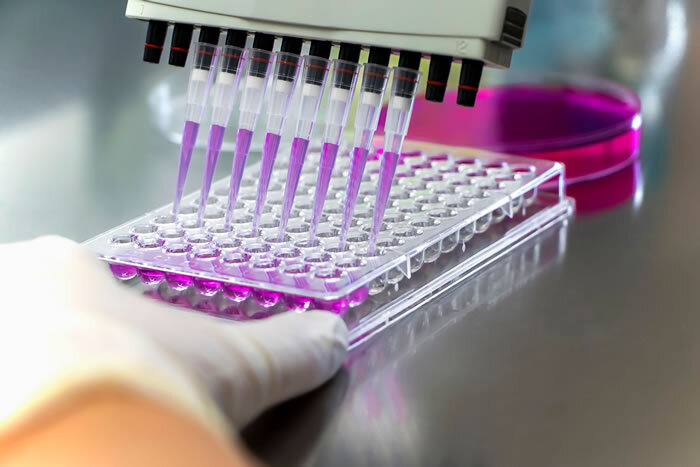
Cytotoxicity was evaluated using an MTT assay, which measures cell viability based on the ability of living cells to convert MTT reagent into a coloured product. In parallel, the cells were examined microscopically for any morphological changes indicative of a toxic response. No cytotoxic effects were observed for any of the component extracts, demonstrating that residual substances remaining after cleaning were biologically acceptable.
Following the successful completion of this phase, Lucideon undertook a second study on the fully assembled device. Devices cleaned using both manual and automated cleaning processes were subjected to the same cytotoxicity assessment. Again, no cytotoxic effects were observed, providing further evidence that both cleaning methods effectively removed residual contaminants to safe levels.
Value to the client
By utilising a worst-case validation approach, Lucideon helped the client reduce testing and validation costs while generating robust evidence to support multiple device configurations. The study confirmed the biological acceptability of the cleaning process, supported family device claims, strengthened the client's regulatory submission, and provided confidence in their cleaning validation strategy.